Andrew Cohen

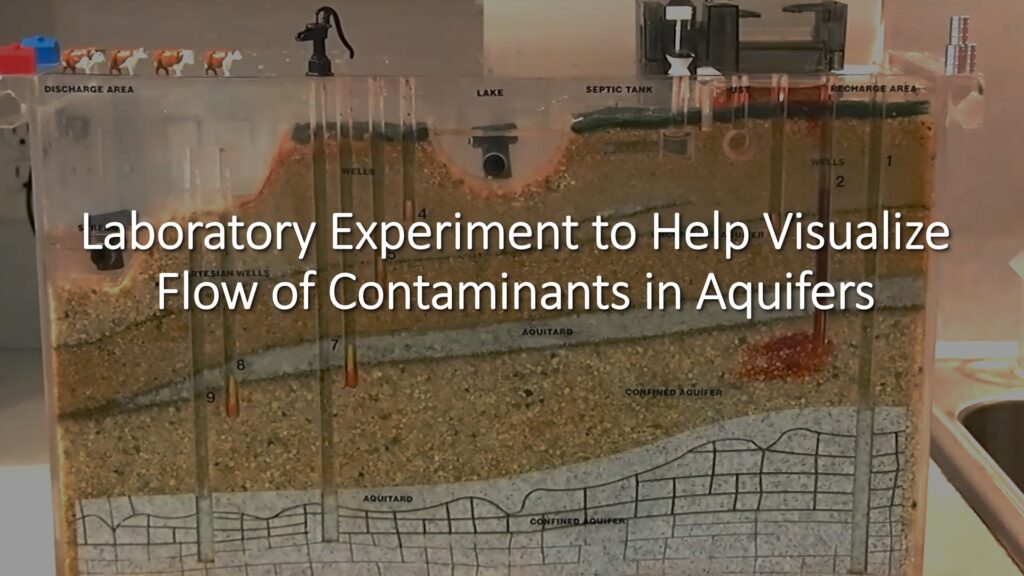
Laboratory Experiment to Visualize Groundwater Pollution

This webinar excerpt explores how contaminants move through groundwater and provides a mental framework for understanding subsurface pollution. Since groundwater contamination is hidden beneath the surface, visualizing it is often challenging. This presentation enhances conceptual understanding by using a water-saturated sand tank experiment to demonstrate the flow and transport mechanisms of contaminants in groundwater. The […]

Laboratory Experiment to Visualize Groundwater Pollution Read More »
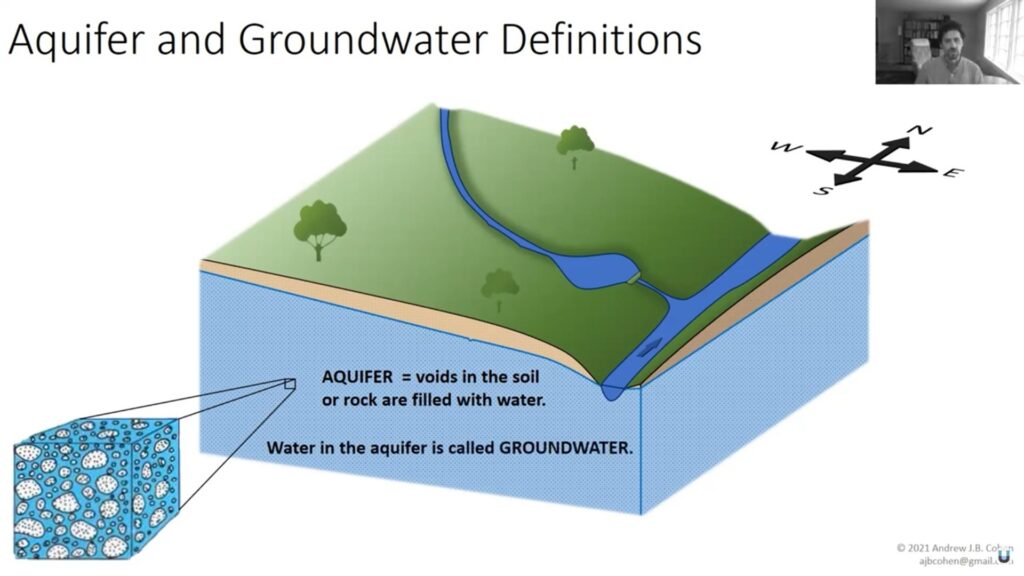
Why Groundwater Matters: A Visual Overview

The Groundwater Resource provides a brief overview of groundwater as a critical water supply, emphasizing its global significance, hydrogeologic characteristics, and widespread reliance for drinking water and irrigation. This video is an excerpt from the seminar “Introduction to Groundwater Contamination”, presented to the UC Berkeley Department of Civil and Environmental Engineering in September 2021. Key

Why Groundwater Matters: A Visual Overview Read More »

Groundwater-Surface Water Interaction Modeling

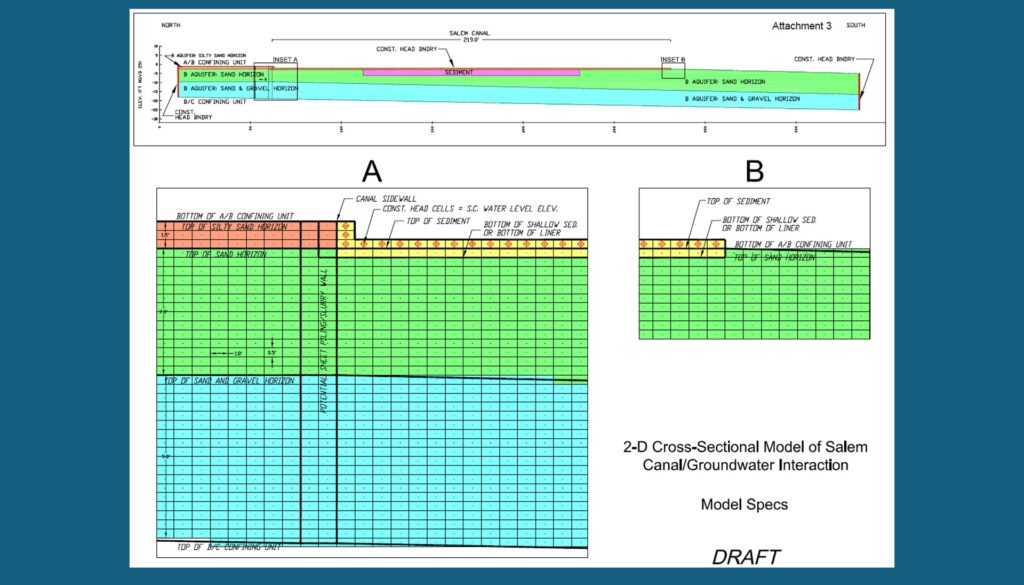
Simulated groundwater discharge to a canal to evaluate whether a migrating plume could contaminate sediment by moving upward through organic-rich deposits. The modeling, conducted with MODFLOW, tested multiple scenarios, including variations in canal water levels, groundwater elevations measured in wells on either side of the canal, and variable sediment permeability. This work was part of

Groundwater-Surface Water Interaction Modeling Read More »

The Importance of Considering Geologic Framework for Data Interpretation

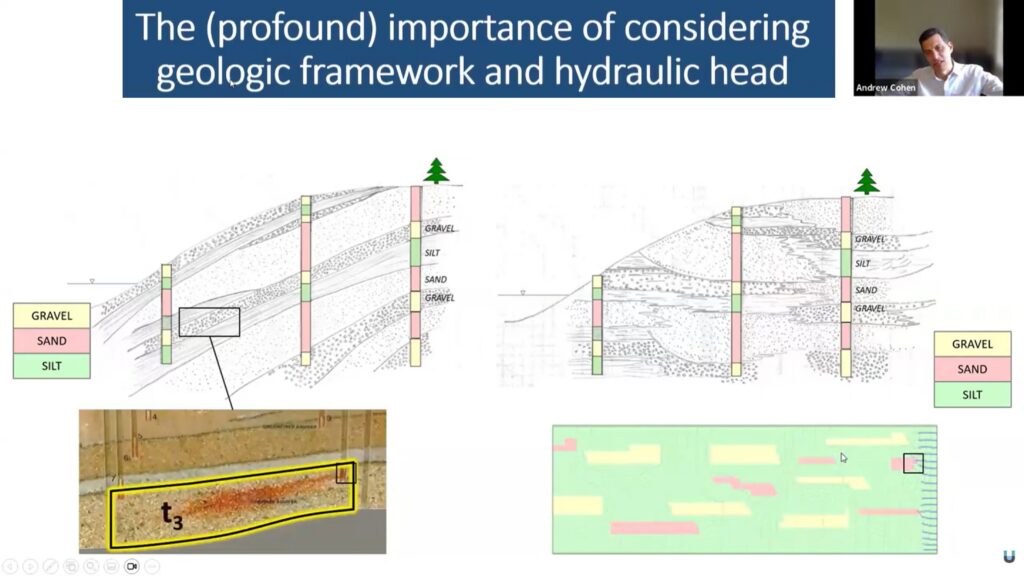
This video explains why groundwater contamination data cannot be interpreted in isolation from the geologic framework and hydraulic head conditions. Using hypothetical borehole data, it shows how a conventional, overly simplified sedimentary interpretation can lead to incorrect assumptions about groundwater flow and plume behavior. By reinterpreting the same data within the context of a meandering

The Importance of Considering Geologic Framework for Data Interpretation Read More »

Effect of Aquitards on Groundwater Plume Migration and Drinking Water Quality

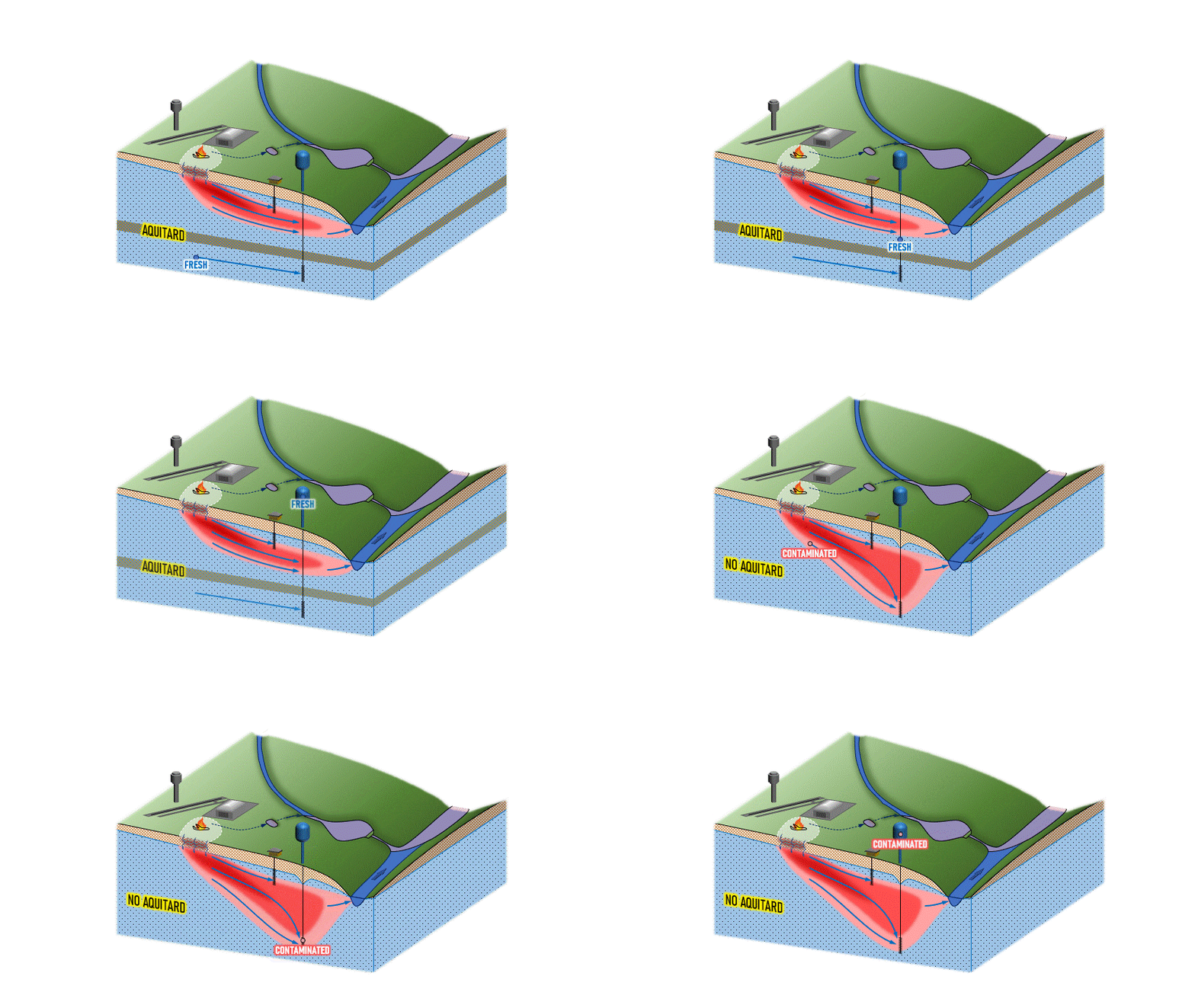
This abbreviated animation demonstrates a basic groundwater contamination scenario, highlighting the important role of an aquitard.   An aquitard is a low-permeability geologic layer (e.g., clay) in limiting the vertical migration of contaminated groundwater. It illustrates how, in the absence of such a protective horizon, pumping from a municipal drinking water supply well can draw

Effect of Aquitards on Groundwater Plume Migration and Drinking Water Quality Read More »

Introduction to Groundwater Contamination in Fractured Rock

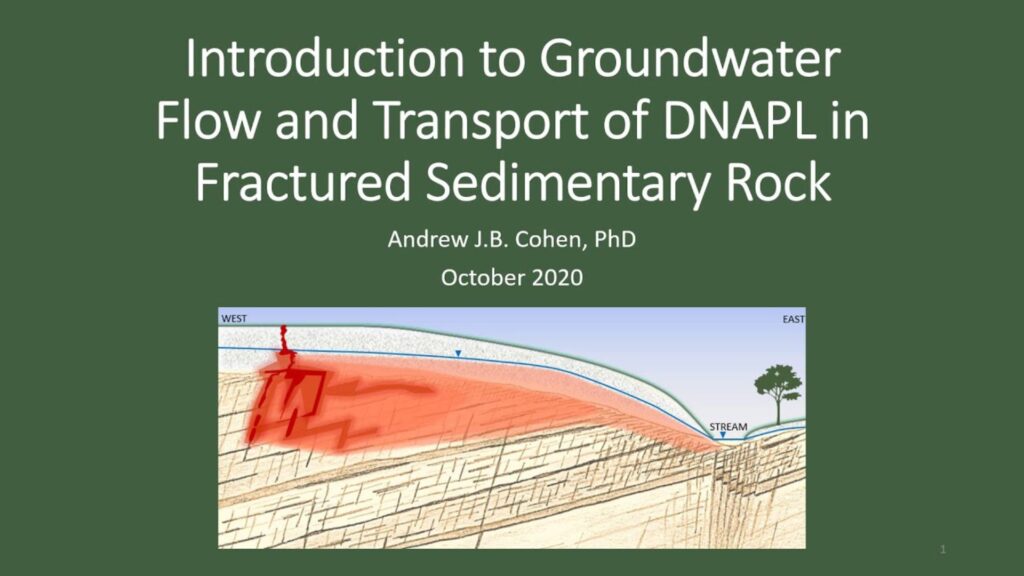
This webinar excerpt explores how contaminants migrate through fractured bedrock aquifers, a critical and complex aspect of hydrogeology. Unlike groundwater flow in unconsolidated materials (such as sand and gravel), fractured rock environments create highly variable and unpredictable pathways for contamination.   The video examines a cross-section of fractured sandstone and siltstone, highlighting key hydrogeologic processes,

Introduction to Groundwater Contamination in Fractured Rock Read More »

Understanding Plume Migration and Depiction Using Maps

This short educational video illustrates how PFAS from AFFF (aqueous film-forming foam) migrates through the subsurface and impacts groundwater systems. Designed for a broad audience, including policymakers, attorneys, and the general public, it explains key hydrogeologic principles using a clear visual sequence. You’ll learn:   How aquitards can restrict the vertical migration of PFAS, even

Understanding Plume Migration and Depiction Using Maps Read More »

Modeling Contaminant Transport – NJIT

Modeling Contaminant Transport, CHE 702 3 credits, Fall 2018 Mondays, 6:00-9:05, FMH 409 Instructor: Dr. Andrew JB Cohen Contact Info: ajbcohen@njit.edu   Overview This course focuses on the description, analysis, and prediction of the fate and transport of chemicals in groundwater, soil, and sediment. Principles of contaminant transport and associated mathematical and numerical models will

Modeling Contaminant Transport – NJIT Read More »