
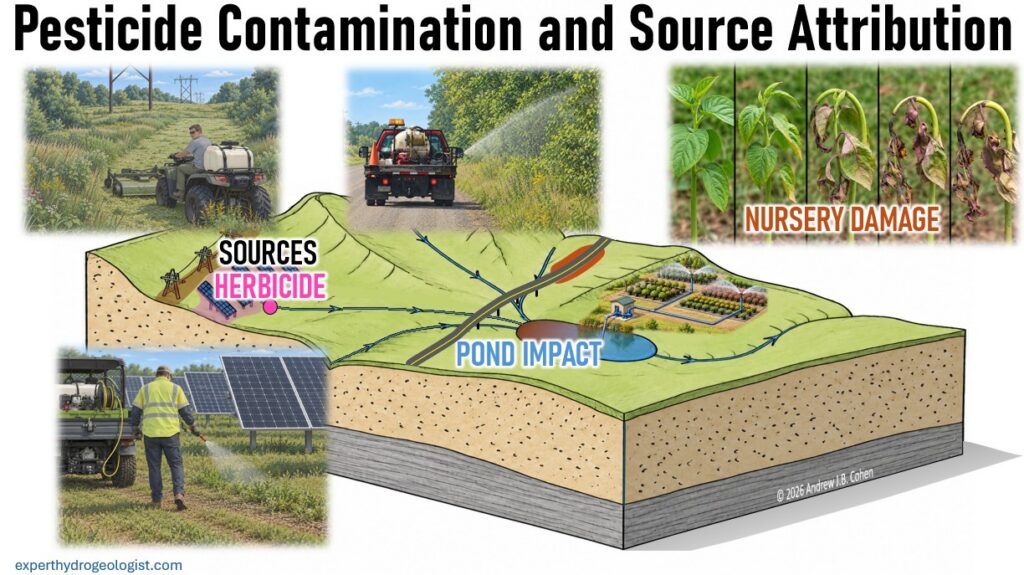
Provided technical consulting support in a multi-party environmental dispute involving alleged herbicide contamination of an irrigation pond and damage to commercial nursery plants.
The assessment focused on herbicides used for vegetation management at nearby solar facilities, utility corridors, and rights-of-way. The objective was distinguishing among multiple potential sources that could have resulted in contamination of the irrigation pond. Pesticides in question included:
- aminocyclopyrachlor
- glyphosate (typically associated with “Roundup”)
- “2,4-D” (2,4 dichlorophenoxyacetic acid)
The investigation included a review of
- opposing expert analyses
- herbicide application histories
- soil, water, sediment, and plant tissue concentration data
- surface water and land use characteristics
- topography and watershed delineations
- potential surface-water and groundwater transport pathways
- timing of herbicide applications relative to reported plant damage, sampling dates, and precipitation records
- uncertainties in the available environmental data
While some of the damages could be attributed to a particular source area, data also suggested that another area and associated co-defendant contributed to contamination of the irrigation pond. However, the assessment identified significant limitations in the overall dataset. As a result, a scientifically defensible and quantitative allocation of responsibility was not justified. These findings assisted legal counsel in preparing for mediation and settling the case.